 Ferndale
 Roofing on a Beach Bluff: Why Sandy Point Takes More Damage
Sandy Point sits right on the water, and that location is exactly why roofs out there wear differently than roofs a few miles inland in Ferndale or Bellingham. Salt-laden wind off the Strait comes straight at these homes with almost nothing to slow it down. Add in the driving rain that rolls through Whatcom County most of the fall and winter, plus a moss season that can stretch from October well into May, and you have three separate stressors working on the same roof at the same time. None of them alone would be a crisis. Together, over years, they wear through fasteners, lift shingle edges, and open up small gaps that eventually become leaks.
We work storm damage calls in Sandy Point regularly, and the pattern we see is consistent: damage that starts small and hidden, gets ignored because there's no obvious leak yet, and then shows up as a stain on a ceiling six months later when the next storm finishes the job. This page covers what storm damage actually looks like on a Sandy Point roof, what a correct repair involves, and how we handle the job from first call to final inspection.
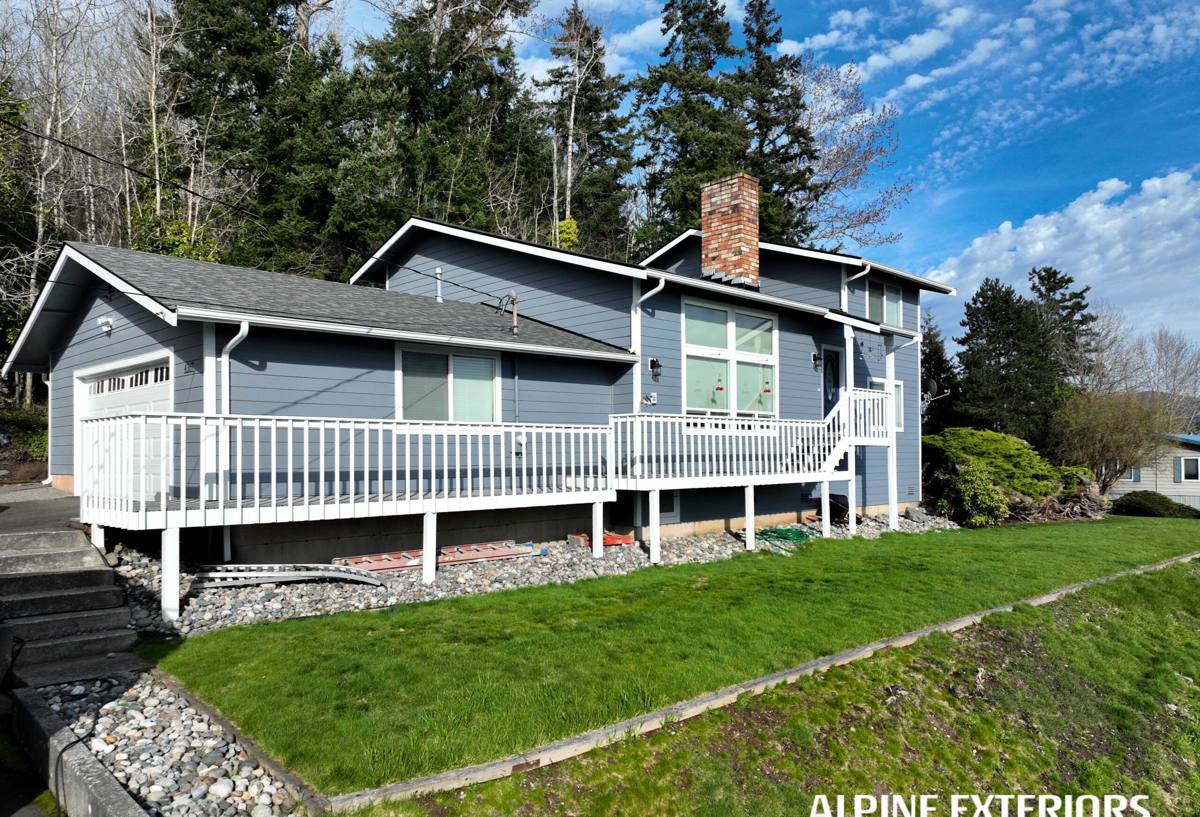
What "Storm Damage" Actually Means Here
Storm damage isn't always a dramatic hole in the roof. On the coast, it's usually a combination of smaller things that add up:
Wind Damage
Sustained wind off the water doesn't just push on a roof — it gets underneath shingle tabs and pulls up on them. Once a tab is lifted even slightly, the seal underneath breaks, and it won't reseal itself. The next gust catches that edge and the damage spreads. We also see ridge cap shingles and flashing edges take the brunt of it, since they sit at the highest, most exposed points of the roof.
Wind-Driven Rain
Rain that falls straight down mostly sheds off a roof the way it's designed to. Rain that's being driven sideways by 30-40 mph gusts behaves differently — it gets pushed up under shingle edges, around vent boots, and along flashing seams that would never leak in a normal rainstorm. This is the damage type that causes the most confusion for homeowners, because the roof can look fine from the ground and still be actively leaking during a storm.
Debris Impact
Sandy Point has more mature trees close to rooflines than a lot of newer developments. Wind storms bring down branches, and even a small branch dropped from height can crack a shingle, dent a vent cap, or knock granules loose in a spot that then wears through faster than the rest of the roof.
Moss and Trapped Moisture
This one isn't storm damage in the classic sense, but it compounds everything above. Moss holds moisture against the roof surface, and in shaded, north-facing sections common on Sandy Point lots, that moisture barely dries out between rain events. A roof section already weakened by moss retention is far more likely to fail under storm stress than a clean, well-ventilated one.
Signs a Sandy Point Homeowner Should Watch For
Most storm damage is visible if you know where to look, but a lot of it isn't visible from the ground. Here's what we tell homeowners to check after any significant wind event:
- Shingle tabs that look lifted, curled, or are missing outright
- Granules collecting in gutters or at the base of downspouts
- Bent, dented, or missing flashing around chimneys, skylights, or vent pipes
- Soft or discolored spots on interior ceilings, especially near exterior walls
- Daylight visible through the attic roof deck
- Moss buildup that's thicker on one slope than the rest of the roof
- Debris — branches, needles, grit — collected in valleys where water concentrates
If you see any of these, the right move is to get it looked at before the next storm, not after it. A small repair now is almost always cheaper and simpler than the water damage repair that follows a second or third storm hitting the same weak spot.
Our Repair Process
1. Assessment First, Not a Sales Pitch
We start with a full roof inspection, not just a look at the spot you called about. Storm damage rarely stays in one place — if wind lifted shingles on one slope, it's worth checking the ridge, the flashing, and any exposed valleys while we're up there. We'll show you what we find and explain what's urgent versus what can be scheduled.
2. Documentation
If you're planning to file an insurance claim, we document damage with photos and a written scope before any repair work starts. This matters — insurers want to see clear evidence the damage is storm-related and not general wear, and having that documentation ready speeds up the claims process considerably.
3. Matching Materials Correctly
A repair only looks and performs right if the shingles, flashing, and fasteners match what's already on your roof, or are a reasonable functional match when exact products aren't available. We don't patch with whatever's on the truck — mismatched shingles age at different rates and create a visible seam that gets worse over time.
4. Fastening for Coastal Wind
Standard fastening patterns are built around average wind exposure. Sandy Point isn't average exposure — it's a waterfront lot taking direct gusts with no windbreak. Where it's appropriate, we use tighter nailing patterns and proper sealant at exposed edges to give repaired sections better wind resistance going forward, not just a patch that fixes today's damage and fails in the next storm.
5. Flashing and Sealant Details
Most leaks that come back after a "repair" come back because the flashing wasn't addressed, only the shingles were. We check and, where needed, replace flashing at chimneys, vent boots, and valleys as part of the repair, not as an upsell — a shingle patch over bad flashing is a repair that's designed to fail again.
Repair vs. Replacement: How We Help You Decide
Not every storm-damaged roof needs to be replaced, and not every one should just be patched. The right call depends on the age of the roof, how widespread the damage is, and what condition the roof was in before the storm hit.
| Factor | Leans Toward Repair | Leans Toward Replacement |
|---|---|---|
| Roof age | Under 12-15 years | Nearing or past expected lifespan |
| Damage extent | Isolated to one slope or area | Spread across multiple slopes |
| Underlying condition | Deck and flashing sound elsewhere | Existing moss/moisture damage found during inspection |
| Shingle availability | Matching product still available | Discontinued, mismatch would be visible |
| Storm frequency exposure | First significant damage event | Repeat damage in the same areas |
We'll always give you a straight answer on which side of this table your roof falls on. If a repair is the honest, durable answer, that's what we'll recommend and price. If the damage or the roof's overall condition means a repair would just be a short-term fix, we'll tell you that too, with our reasoning, so you can decide with real information rather than guesswork.
Why the Coastal Climate Changes the Materials Conversation
Salt air affects metal components — flashing, fasteners, vent caps — faster than it affects the shingles themselves. On a standard inland repair, galvanized fasteners are usually fine for the life of the roof. On a waterfront property like Sandy Point, we lean toward corrosion-resistant fastener and flashing options where the budget allows, because replacing a repair's fasteners in five years due to salt corrosion defeats the point of the repair. This isn't upselling — it's matching the materials to the actual environment the roof lives in.
Moss-resistant granule shingles are also worth discussing for any section being repaired or replaced on a shaded, north-facing slope. They cost more upfront and won't stop moss entirely on their own — nothing does without some maintenance — but they slow regrowth meaningfully in exactly the conditions Sandy Point's tree-shaded lots create.
Timing: Why We Recommend Acting Before the Wet Season Peaks
Whatcom County's wettest, windiest stretch typically runs from November through February, with additional wind events common into early spring. Roof repairs can be done in wet weather, but they're not ideal in it — sealants cure better, shingles seat better, and workers can move safely on a roof surface that isn't actively wet. If you've spotted storm damage in late summer or early fall, that's the window to get it fixed before the next system rolls through. If damage happens mid-winter, we still respond quickly, but the underlying repair may need a follow-up visit once conditions allow for a fully cured seal.
A Post-Storm Checklist for Sandy Point Homeowners
- Walk the exterior and note any debris, shingle pieces, or granules on the ground
- Check gutters and downspouts for excessive granule buildup after a storm
- Look at ceilings and around skylights or attic access for new staining
- Photograph anything visible from the ground before it's cleaned up — useful for insurance
- Avoid climbing onto the roof yourself, especially on wet or windy days
- Call for an inspection promptly rather than waiting to see if a small issue gets worse
- Keep any prior roofing paperwork or warranty information handy for your contractor
Why a Crew That Already Works Sandy Point Matters
Roofing crews that mostly work inland neighborhoods don't see coastal wind exposure or salt-air fastener corrosion often enough to plan for it by default. We work Ferndale and the surrounding Whatcom County coastline regularly enough that accounting for wind exposure, moss patterns on shaded coastal lots, and salt-air material choices isn't a special add-on for us — it's just how we scope every repair out there. That familiarity also means we're realistic about access: some Sandy Point lots have tighter driveways or seasonal road conditions, and we plan equipment and scheduling around that upfront instead of discovering it on arrival.
Insurance Claims: What We Can and Can't Do
We're not a public adjuster, and we won't pretend to be one. What we can do is give you an honest, well-documented scope of the storm damage, photos taken before repair work begins, and a written estimate that your insurer can review. Most storm damage claims move faster when the contractor's documentation is clear and specific rather than vague, and that's the standard we hold our estimates to. If your insurer's adjuster wants to walk the roof with us present, we're glad to do that as well.
If you've got storm damage on a Sandy Point roof — or you just want a second set of eyes after a rough night of wind off the water — we're happy to come take a look. The estimate is free, there's no pressure to book anything on the spot, and you'll get a straight answer about whether it's a repair, a bigger fix, or nothing urgent at all. Use the form below to get on our schedule.