 Ferndale
 Metal Roofing Built for Semiahmoo's Waterfront Exposure
Semiahmoo sits right on the water, and that changes what a roof has to survive compared to a typical inland lot elsewhere in Whatcom County. Salt-laden air drifts off Semiahmoo Bay and Drayton Harbor around the clock, working on exposed metal fasteners and flashing even on days when nothing looks wrong from the ground. Storms push rain sideways off open water rather than letting it fall straight down and run off cleanly, and the spit's exposed position means wind loads that a sheltered, tree-lined property inland rarely has to deal with. Add in a long moss season that settles into shaded roof planes for much of the year, and you've got a combination of stresses that asks more of a roof here than it would almost anywhere else in the service area.
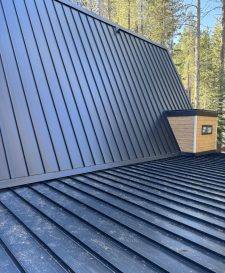
Metal roofing holds up well against that combination when it's specified and installed correctly — corrosion-resistant panel and fastener systems, proper flashing at every transition, and detailing that accounts for wind uplift and thermal movement. This page covers what that actually looks like for a Semiahmoo home: the material choices that make sense this close to salt water, what a correct install involves, and how we run the job.
What the Semiahmoo Climate Does to a Metal Roof
Salt Air and Corrosion
Waterfront air carries fine salt particles that settle on every exposed surface, including roofing metal, fasteners, and flashing. Over years, that accelerates corrosion on undercoated steel and lower-grade fasteners far faster than it would on an inland roof just a few miles away. It's a slow process — nothing fails in the first season — but it's exactly the kind of gradual deterioration that turns into a leak years down the road if the wrong materials went on to begin with.
Driving Rain Off the Bay
Storms moving across open water pick up speed and hit a waterfront roof at an angle, driving rain up under panel laps, around penetrations, and into any seam that wasn't properly sealed or lapped. A roof detailed for rain that falls straight down performs very differently than one built to handle water being forced sideways and upward, and Semiahmoo's exposure to the bay makes that distinction matter more than it would on a sheltered inland lot.
Wind Exposure on the Spit
Semiahmoo's position out on open water means less wind buffering from surrounding terrain or tree cover than most properties get elsewhere in the area. That translates directly into higher uplift forces on a roof, particularly at eaves, ridges, and rake edges. Fastening patterns and clip spacing that are perfectly adequate on a calmer inland site can be undersized here, and it's a detail that doesn't show up as a problem until the first real windstorm tests it.
A Long Moss Season
Shaded and north-facing roof planes in this part of Whatcom County stay damp for a large share of the year, and moss takes hold readily once it gets a foothold. On a metal roof, moss is less of a structural threat than it is on shingles, but it still holds moisture against seams and fasteners longer than a clean, dry surface would, which matters more given the corrosion pressure already coming off the salt air.
Why Metal Roofing Makes Sense for a Semiahmoo Home
Metal isn't the only roofing option that works in this area, but for a waterfront property specifically, it has real practical advantages worth weighing seriously.
- Long service life: A correctly installed metal roof with a quality finish routinely outlasts asphalt shingles by decades, which matters on a property where re-roofing means dealing with wind and water exposure all over again.
- Sheds moss and debris better: The smooth, hard surface of a metal roof gives moss and organic debris far less to grab onto than a textured shingle surface, which helps on the shaded, damp roof planes common in this area.
- Strong wind performance when properly fastened: Metal panel systems, installed with the correct clip and fastening spec, handle sustained wind loads well — a real advantage on an exposed waterfront lot.
- Non-combustible: Metal roofing doesn't contribute fuel to a fire, which matters for both household safety and insurance considerations.
- Low long-term maintenance when the coating is right: A quality factory finish resists fading and chalking far longer than field-applied coatings, reducing the upkeep a waterfront property otherwise demands.
None of that comes automatically just because the roof is metal. The wrong panel gauge, an uncoated or mismatched fastener, or a flashing detail that wasn't built for wind-driven rain can undercut every one of those advantages on a property this exposed. The material only performs the way it's supposed to when the system underneath it is built correctly.
Choosing the Right Metal Roofing System for Semiahmoo
| System | Best Fit | Why It Matters Here |
|---|---|---|
| Standing seam steel or aluminum | Most waterfront and higher-exposure homes | Concealed fasteners eliminate the most common corrosion and leak point on an exposed, salt-air property |
| Exposed-fastener steel panel | Outbuildings, shops, and budget-conscious re-roofs | Lower upfront cost, but exposed fasteners need regular inspection and eventual replacement in salt air |
| Stone-coated steel | Homes wanting a shingle or tile profile with metal's durability | Textured surface can hold moisture slightly longer than smooth panel, worth weighing against the moss season here |
| Aluminum panel systems | Properties closest to the water | Naturally corrosion-resistant base metal, a strong option where salt exposure is heaviest |
For most homes directly on or near Semiahmoo's waterfront, we lean toward standing seam in steel or aluminum with a quality PVDF (Kynar-type) finish. Concealed fasteners remove the weakest point in an exposed-fastener system, and a strong factory finish holds its color and corrosion resistance far longer than a lower-grade paint system. Exposed-fastener panel still has its place on outbuildings or where budget is the driving factor, but it asks for more maintenance vigilance the closer a roof sits to salt water.
What a Correct Metal Roof Installation Involves
The panel itself is only part of the system. On a waterfront property, the details underneath and around it are what actually determine whether the roof performs for decades or starts giving trouble within a few years.
Underlayment and Ice-and-Water Shield
A high-temperature synthetic underlayment rated for use under metal gives the roof deck a real secondary barrier if wind-driven rain ever gets past the panel seams. Self-adhered ice-and-water membrane at eaves, valleys, and around penetrations adds another layer of protection at the transitions where water is most likely to find a way in.
Fastening, Clips, and Thermal Movement
Metal roofing expands and contracts with temperature swings more than shingles do, and a standing seam system needs to be installed with floating clips that let the panel move without tearing loose at the fastener. Getting clip spacing and fastening pattern right also directly determines how well the roof holds up under the wind loads a Semiahmoo property is more exposed to than most.
Flashing at Valleys, Ridges, and Penetrations
Nearly every metal roof leak we've traced back to its source starts at a flashing detail, not in the open panel field. Valleys, ridge caps, chimney and vent penetrations, and wall transitions all need flashing that's properly formed, lapped in the correct direction, and integrated with the underlayment — not sealed after the fact with a bead of caulk standing in for good detailing.
Preventing Galvanic Corrosion
Mixing incompatible metals on a roof — say, the wrong fastener alloy against a steel or aluminum panel — sets up galvanic corrosion that eats through metal from the inside of the connection outward, and salt air accelerates that reaction significantly. Every fastener, flashing piece, and accessory has to be matched to the panel metal, which is a detail that's easy to overlook and expensive to fix once it's built into the roof.
Cost Factors for a Semiahmoo Metal Roof
| Factor | What It Affects | Why It Matters Here |
|---|---|---|
| Panel system and metal type | Material cost and corrosion resistance | Aluminum and quality steel systems cost more upfront but hold up better against sustained salt exposure |
| Fastener and flashing compatibility | Long-term corrosion risk | Matched-metal hardware avoids galvanic corrosion that a waterfront property is especially prone to |
| Finish coating grade | Color retention and coating lifespan | A PVDF/Kynar-type finish outlasts a basic paint system by decades under UV and salt exposure |
| Wind and fastening spec | Clip spacing, fastener count, and labor | Open waterfront exposure calls for a tighter fastening pattern than a sheltered inland lot |
| Tear-off vs. overlay | Whether hidden deck damage gets found and repaired | Tear-off reveals moisture damage that can build up unnoticed under an older roof near the water |
| Roof complexity and access | Labor time and staging needs | Waterfront lots can add site access and safety considerations beyond a typical in-town roof |
Because a Semiahmoo property's exact exposure, roof geometry, and existing deck condition all factor in, we walk the roof in person before putting a real number on paper rather than quoting off a rough estimate.
How Our Process Works
- In-person inspection: We get on the roof and into the attic where possible, rather than estimating from photos, and document the actual condition we find.
- Written estimate: You get an itemized bid covering panel system, underlayment, flashing scope, fastener spec, and cleanup — not a single vague line item.
- Material selection: We help you weigh panel type, metal, and finish against your budget and how close the home sits to the water.
- Tear-off and deck repair: Existing roofing comes off completely, and any deck damage we find gets addressed before new roofing goes on.
- Underlayment, flashing, and panel installation: Each layer goes in to manufacturer spec, with particular attention to matched-metal hardware and flashing at every transition.
- Final walkthrough: We review the finished roof with you and do a full site cleanup before considering the job done.
Why Hiring a Crew That Already Works Semiahmoo Matters
A crew that's worked roofs in and around Semiahmoo has already seen how quickly salt air corrodes the wrong fastener, how wind off open water finds gaps in a rushed flashing job, and which roof orientations hold moss longest through the wet months. That experience shows up in dozens of small decisions over the course of a job — decisions a crew unfamiliar with a waterfront property's specific exposure might not think to make at all. It also matters after the job is finished. A workmanship warranty only means something if the company backing it is still reachable and still working in the area years later.
A Practical Checklist Before You Choose a Roofer
- Do they specify panel metal, gauge, and finish coating, not just "metal roofing"?
- Is fastener and flashing metal compatibility addressed explicitly to prevent galvanic corrosion?
- Does the bid call for a full tear-off with deck inspection rather than an overlay?
- Is the fastening and clip spec adjusted for a waterfront wind exposure, not a generic inland pattern?
- Do they carry current WA contractor licensing, liability insurance, and workers' compensation?
- Can they point to recent, real work in or near Semiahmoo or comparable waterfront properties?
Signs Your Semiahmoo Roof May Need Attention
Metal roofs tend to fail slowly and at specific points rather than all at once, which means the warning signs are worth catching early.
- Rust streaking at fastener heads, seams, or flashing edges
- Panels that have loosened, oil-canned, or shifted slightly from their original position
- Moss or dark staining building up on shaded or north-facing roof planes
- Water staining on interior ceilings or in the attic, especially near valleys or penetrations
- Visible gaps or separation at flashing around chimneys, vents, or wall transitions
If any of that sounds familiar, it's worth having the roof looked at before the next stretch of stormy weather off the bay forces the issue.
If you'd like an honest, no-pressure look at your Semiahmoo roof and a written estimate you can compare against anything else you've received, we're glad to come take a look. Use the form below to request a free estimate.