 Ferndale
 Window Installation in Sudden Valley: A Different Kind of Wet
Sudden Valley sits on the south shore of Lake Whatcom, wrapped in dense second-growth forest, with homes spread across hilly terrain at a wide range of elevations and sun exposures. It's one of the more heavily shaded residential settings in the Bellingham area, and that changes what a window installation needs to account for compared with a more open, wind-exposed property elsewhere in Whatcom County. Marine air still moves through this part of the county and carries some of the same salt-tinged moisture that stresses hardware closer to the coast, but the bigger factor here is what the tree canopy and the lake itself do to a wall: long stretches where surfaces never fully dry out, driving rain that hits different elevations of the same house with different force depending on the terrain, and a moss and mildew season that runs most of the year on shaded faces.
We install windows throughout Sudden Valley alongside siding, roofing, and deck work, and on window installation specifically we spend more time on flashing and sequencing than on which brand ends up on the label. In this climate, a mid-grade window installed with a correct flashing plan will outlast a premium window installed sloppily, almost every time.
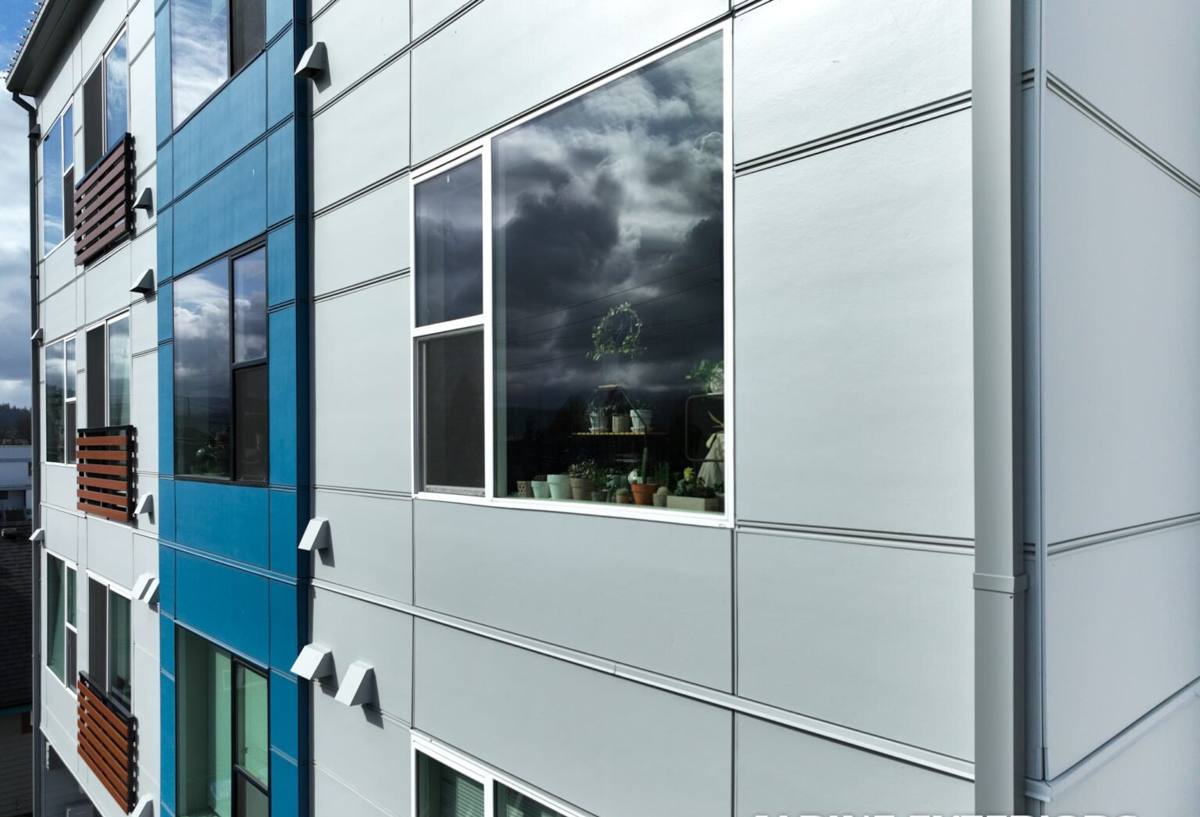
What Sudden Valley's Setting Does to a Window Opening
Heavy Shade and Slow Drying
Most lots in Sudden Valley have at least one wall face that gets very little direct sun for most of the year. That matters for a window opening because the sill, the surrounding trim, and the flashing underneath all depend on periodic drying to shed the moisture that works its way in over a wet season. On a shaded wall, that drying window shrinks or disappears, so any weak point in the installation — a flashing lap that's too short, a sill pan that wasn't sloped correctly — stays wet longer and fails faster than the same mistake would on an open, sun-exposed lot.
Driving Rain and Uneven Exposure
Lake Whatcom adds humidity on top of the county's normal rainfall, and Sudden Valley's hilly terrain means wind-driven rain doesn't hit every wall of a house the same way. A window on an elevation facing open water or a ridge gap can take a real beating during a winter storm while a window on the sheltered side of the same house barely gets touched. We treat each elevation on its own terms rather than assuming uniform exposure, because a flashing detail that's adequate on a sheltered wall can be undersized on an exposed one.
Marine Air and Hardware
Even tucked back among the trees, Sudden Valley gets enough marine-influenced air moving through Whatcom County to accelerate corrosion on underspecified fasteners, hinges, and locking hardware over years of exposure. It's not the direct salt spray a waterfront property closer to the Sound would see, but it's enough that we default to corrosion-resistant fasteners and flashing metal on every install here rather than treating that as an upgrade.
A Long Moss and Mildew Season
Shade, lake humidity, and mild temperatures are the exact conditions moss and mildew need, and that combination stays active across most of the year in Sudden Valley. Window sills, trim, and the wood framing around older openings are common places it takes hold, especially on north-facing elevations or windows tucked under deep eaves with poor airflow. A correctly installed window with proper drainage and a sloped sill sheds that moisture instead of holding it against the frame.
Why We Focus on Flashing, Not Just the Window Brand
Reputable window manufacturers all build solid products. What actually determines whether a window stays dry for decades or starts leaking within a few wet seasons is almost always the installation — specifically, how the flashing integrates with the weather-resistive barrier and siding around it. On repair calls in shaded, moisture-heavy settings like Sudden Valley, the pattern is consistent: it's rarely the glass or the frame that fails first. It's a flashing lap that was too short, a sill pan that let water pool instead of drain, or caulk used as the primary defense instead of a supplement to proper flashing. Caulk breaks down and cracks over time — it was never designed to be the only barrier against sustained wind-driven rain.
We install vinyl and fiberglass window systems suited to the Pacific Northwest's wet, mild climate, and we'll walk you through real trade-offs rather than pushing a single brand as the only right answer. What we won't compromise on is the flashing sequence, the sill pan detail, and the drainage plan behind the siding — those are standard on every window we install, not an upgrade you have to ask for.
What a Correct Window Installation Involves
Opening Assessment and Prep
Before a new window goes in, we check the rough opening for square, level, and any existing rot or moisture damage in the framing — common on older Sudden Valley homes where a prior installation didn't account for how long this setting stays wet. Any compromised framing gets addressed before the new unit is set, not discovered after the fact.
Sill Pan and Drainage
The sill pan is the first line of defense at the bottom of the opening, and it needs to slope outward so any water that gets past the window drains away from the framing instead of sitting against it. On a shaded, slow-drying wall, this detail matters more than it would on an open, sun-exposed elevation, because standing moisture has fewer chances to dry out between storms.
Flashing Sequence
Flashing has to be layered correctly — sill first, then jambs, then head — so each course laps over the one below it and directs water down and out rather than behind the weather-resistive barrier. We size the lap and the materials to the specific elevation's exposure, treating a wind-exposed lake-facing wall differently than a sheltered, tree-covered one.
Air Sealing and Insulation
Once the window is set, shimmed plumb and square, and fastened per the manufacturer's schedule, the gap between the frame and the rough opening gets sealed with a low-expansion foam or backer rod and sealant rated for the movement a window frame goes through across the county's temperature swings. This step affects both energy performance and how much condensation shows up on the interior glass during cold, damp stretches.
Trim and Finish Integration
Exterior trim and any siding cut back around the opening get finished so the whole assembly sheds water as a system rather than depending on one component to do all the work. This is also where we tie the new flashing into the existing siding's own water management, which matters more on an older home than a new build.
Installation Checklist Worth Asking About
- Ask to see the flashing sequence explained step by step, not just the window brand being proposed
- Confirm the sill pan slopes outward and isn't relying on caulk alone to shed water
- Ask how fastener and flashing metal are selected for corrosion resistance in this setting
- Get a written scope that separates the manufacturer's product warranty from the installer's labor warranty
- Confirm current Washington contractor licensing and active liability insurance
- Ask how they'll handle any rot or moisture damage found in the opening once the old window comes out
New Construction vs. Replacement Installation
The core installation principles are the same either way, but the sequencing and constraints differ enough that it's worth knowing which situation you're in before you get a quote.
| Factor | New Construction | Replacement |
|---|---|---|
| Access to framing | Open stud bays and WRB, flashing built in from scratch | Existing siding and trim must come off or be worked around |
| Hidden issues | Rare — framing and sheathing are new | Common — rot, old flashing failures, or moisture damage often surface once the old unit is out |
| Sequencing | Coordinated with framing and siding crews on a build schedule | Standalone project, scheduled around the homeowner's timeline |
| Code review | Must meet current Washington State Energy Code U-factor minimums | Often a good opportunity to upgrade glazing even if not code-required |
| Cost driver | Coordination and code compliance | Condition of the existing opening |
Our Process, Start to Finish
- On-site assessment — we check each opening's condition, exposure, and framing, and note anything specific to the elevation or the property's tree cover
- Honest recommendation — repair, replace, or reframe, with the reasoning explained, not just the fastest thing to sell
- Product selection — vinyl or fiberglass frame, glazing package, and hardware matched to the opening's exposure and the homeowner's budget
- Removal and opening prep — old unit comes out, framing gets checked, and any rot or prior flashing failures get corrected before the new window goes in
- Installation and flashing — sill pan, jamb flashing, head flashing, and air sealing installed in sequence, sized to that wall's actual exposure
- Trim and finish — exterior trim and siding tie-in completed so the whole assembly sheds water as one system
What Drives Cost
We won't quote a number without seeing the opening, but the factors that consistently move price are the same across most Sudden Valley jobs:
| Factor | Why It Matters |
|---|---|
| Opening condition | Rot or old flashing failures found once the existing window comes out add repair work before the new one goes in |
| Frame material | Vinyl is generally more affordable; fiberglass is more dimensionally stable and can hold paint for a custom color |
| Glazing package | Double or triple-pane options with low-E coatings affect both energy performance and interior condensation |
| Elevation exposure | A wind- and rain-exposed lake-facing wall may need a more robust flashing and sealant package than a sheltered one |
| Number of windows | A multi-window or whole-house project typically has better per-unit economics than a single replacement |
| Access and siding tie-in | Trim and siding that need to be cut back or matched around the opening add labor |
Why Hire a Crew That Already Works Sudden Valley
Manufacturer installation guides are written for average conditions, and Sudden Valley's combination of heavy shade, lake humidity, and uneven terrain-driven exposure doesn't match that average. A crew that's actually worked this specific community knows which elevations need extra flashing lap even when the guide says the minimum is fine, how differently a lake-facing wall behaves from a tree-sheltered one on the same house, and where a shaded sill needs a sloped composite detail instead of relying on caulk to hold up. Those decisions don't show up in a sales conversation, but they're the difference between a window that's still performing cleanly in fifteen years and one that's showing rot and drafts in five.
If you're planning a replacement, working through rot or drafts on an older window, or finishing out a build near the lake, it's worth having someone look at the actual openings before you start pricing units. We offer free, no-pressure estimates for window installation in Sudden Valley and the surrounding Whatcom County area — use the form below to get a time on the schedule.